


The Ultimate Multi-Day Hiking Packing List: What Clothes to Bring for a 5-Day Trek
What Clothing Do You Need for a Multi-Day Hike?
When I first started doing multi-day trekking trips, I made the same mistake most beginners make: I packed for every possible situation.
Extra shirts, multiple hiking pants, backup jackets – the complete “just in case” system.
The result was always the same: a heavy backpack, unnecessary complexity, and a lot of gear that I never actually used in the end.
It wasn’t until I had completed trips through the Norwegian mountains, the Bavarian Alps, and various long-distance hiking trails across Central Europe that I realized something simple but important: successful trekking is not about bringing more – it’s about choosing better.

On multi-day hikes, conditions change constantly. A cold morning can turn into a warm afternoon, followed by wind or rain in the evening.
That’s when I started changing my mindset toward a more intentional backpacking apparel checklist—focused on function rather than quantity.
Multi-Day Hiking Clothing Checklist
| Clothing Item | Quantity | Purpose |
|---|---|---|
| Moisture-wicking base layer | 2-3 | Manage sweat |
| Lightweight fleece | 1 | Morning warmth |
| Rain jacket | 1 | Weather protection |
| Convertible hiking pants | 1 | Replace pants + shorts |
| Hiking socks | 2-3 pairs | Comfort |
| Performance underwear | 2-3 sets | Quick drying |
2. The Three-Layer Hiking Clothing System Explained – Base Layer, Mid Layer, and Outer Layer Essentials
One of the biggest improvements to my packing strategy came from simplifying my clothing into a layering system.
Instead of relying on heavy single-purpose garments, I now build everything around three functional layers:

•Base Layer: A moisture-wicking performance shirt that efficiently moves sweat away from the skin and dries quickly.
•Mid Layer: A lightweight fleece or thermal layer that provides additional warmth in cooler temperatures.
•Outer Layer: A windproof and weather-resistant jacket that protects against rain, wind, and changing weather conditions.
This system works because it is adaptable rather than rigid.
I’ve used it in Norway under completely different conditions within a single day—starting in near-freezing temperatures in the morning, hiking through warm valleys wearing only my base layer at midday, and putting the full system back on when rain arrived in the evening.
Another major advantage is drying time. Each layer dries significantly faster than heavy traditional fabrics, which becomes essential on longer trips when you don’t have spare clothing.
For me, layering is no longer just a technique—it’s the foundation of all multi-day hike clothing.
3. Choosing Versatile Clothing That Earns Its Place in Your Backpack

Over time, I developed one simple rule: every item in my backpack has to justify its place.
If a piece of clothing serves only one purpose, it usually stays at home.
Instead, I rely on lightweight hiking gear essentials that are versatile enough to handle different situations.
This approach naturally leads to a smaller but much more effective setup—moisture-wicking trail clothes, quick-drying fabrics, and gear that performs well in a wide variety of conditions.
The basic idea is simple: fewer items, more functionality.
This is especially important when it comes to trousers. Instead of packing several specialized pairs, I now rely on fewer but more capable options that perform equally well on hiking trails and while traveling.
4. Why Convertible Hiking Pants Are Essential for Backpacking

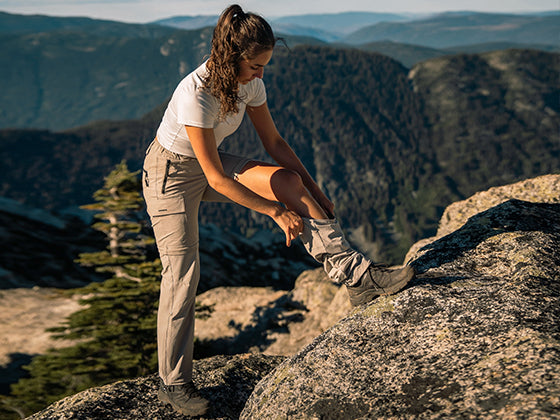
One of the biggest changes in my packing system was switching to packable trekking pants. I used to bring two or sometimes even three different pairs of trousers—a pair of long hiking pants, shorts for warm days, and often an extra pair for the evenings. Today, that seems completely unnecessary.
I really noticed the difference during a seven-day trek along the Rennsteig Trail in Thuringia. Covering almost 170 kilometers, it quickly became clear how valuable it is when one piece of clothing can handle multiple tasks. I often started the mornings wearing long trousers in cool temperatures, then converted them into shorts within minutes when the afternoon sun pushed temperatures close to 30°C (86°F). I didn’t need to carry extra clothing, nor did I have to waste time deciding which trousers would be the best choice.
I’ve also come to appreciate this flexibility on road trips and journeys that combine sightseeing with hiking. I don’t want to keep changing clothes throughout the day—I simply want to leave a café or campsite and head straight onto the trail. That’s exactly why convertible trekking trousers make so much sense to me.
For me, it’s not just about reducing weight or saving pack space—it’s about flexibility. The fewer individual clothing items I need, the simpler my entire packing system becomes. Instead of thinking in terms of long trousers, shorts, or waterproof trousers, I now think in terms of solutions that adapt to changing conditions.
Looking back, this has been one of the smartest changes I’ve made to my gear. I pack lighter, stay more flexible on the trail, and rarely have to compromise anymore. That’s why packable trekking pants have become one of the few items that never stay behind when I’m heading out on a multi-day adventure.
5. Complete 5-Day Trekking Clothing Checklist
If someone asked me today what clothing I would pack for a five-day trekking trip, my answer would no longer be, “As much as possible.” Instead, my focus is on choosing clothing that performs reliably over several days and under a wide range of conditions.
The most important items for me are quick-drying performance shirts. On long hiking days, you usually sweat far more than you expect. That’s why I rely exclusively on moisture-wicking trail clothes that effectively move moisture away from my body and still feel comfortably dry after a short break or even after spending a night in a tent.

A lightweight insulation layer is equally important. Even if daytime temperatures are pleasantly warm, mornings and longer breaks can become surprisingly chilly. A thin fleece or a lightweight synthetic insulated jacket is usually more than enough and works perfectly with the rest of the layering system.
I would also never leave home without a weather-resistant outer layer. For me, it’s less about surviving hours of heavy rain and more about being prepared for strong winds, brief showers, or sudden temperature drops. A lightweight rain jacket takes up very little room in a backpack but can make a huge difference when conditions change unexpectedly.
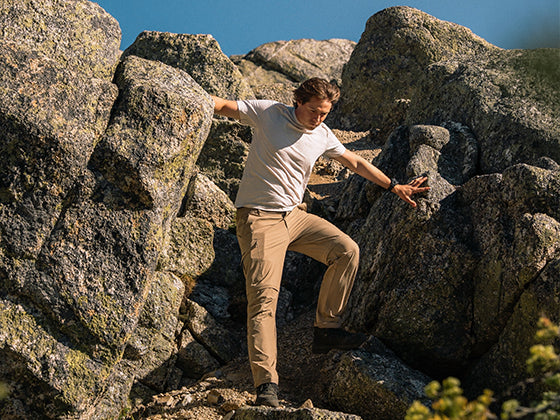
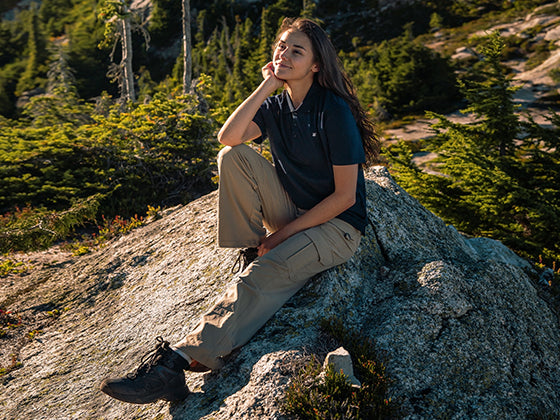
My approach to hiking trousers has probably changed the most over the years. I used to carry two or even three different pairs. Today, I rely almost entirely on packable trekking pants that can handle multiple tasks at once. During our trips, the Moosehill Men’s Convertible Hiking Pants HikerFlex M015 and the Moosehill Women’s Convertible Hiking Pants HikerFlex W024 have proven themselves time and time again. They accompany us not only on hiking trails but also on long drives, camping trips, and city walks before heading to the next trailhead. This versatility saves valuable space in our backpacks and makes packing much easier.
Even small items such as quality hiking socks and functional underwear are often underestimated. In my experience, they significantly improve comfort on long-distance hikes. Rather than packing lots of spare clothing, I prefer taking fewer high-quality items that dry quickly and can easily be worn for several days.
In the end, one simple lesson has stayed with me: for a five-day trekking trip, you actually need surprisingly little clothing—as long as every single item performs its job reliably and works well with the rest of your layering system.
6. Common Hiking Clothing Packing Mistakes – What to Avoid
Even with experience, similar packing mistakes still happen.
The most common one is classic “just in case” packing.

A spare jacket, additional trousers, extra warm layers—all packed for situations that rarely happen.
Another mistake is packing according to everyday habits instead of trail logic.
Cotton is a perfect example. It’s comfortable in everyday life but performs poorly on the trail because it dries slowly and loses much of its effectiveness once it gets wet.
A third mistake is assuming that every day requires a completely fresh outfit.
On a five-day trek, you don’t need five complete sets of clothing. What you need is a small, functional system that can be reused throughout the trip.
In practice, two well-chosen pairs of windproof trekking trousers or cargo hiking pants are often more than enough.
7. My Proven Multi-Day Hiking Apparel Setup
Over the years, my packing list has become increasingly simple. Today, I rely on a core system that has proven itself on most of my multi-day trekking trips.

2–3 Moisture-Wicking Base Layers
•Material: Polyester or Merino wool
•Weight: Approximately 120–180 g per shirt
•Benefit: Often dry within 1–3 hours in open air while efficiently moving sweat away from the skin.
1 Lightweight Insulation Layer
•Usually a thin fleece (approx. 250–350 g) or a lightweight synthetic or down jacket (approx. 300–500 g).
•Combined with the layering system, this is more than sufficient for cool mornings or longer breaks.
1 Water-Resistant or Waterproof Outer Jacket
•Depending on the trip, I choose either a lightweight rain jacket with a 10,000 mm waterproof rating and 10,000 g/m²/24 h breathability, or an ultra-light water-resistant wind jacket (approx. 300–500 g).
•This provides a good balance between weather protection and wearing comfort.
1 Primary Hiking Pant
•For me, this is now almost always a pair of convertible hiking pants, such as the Moosehill Men’s Convertible Hiking Pants HikerFlex M015.
•Weight: Approximately 400–500 g depending on the model.
•Instead of carrying separate long trousers and shorts, one versatile pair is usually enough to adapt to changing conditions.

2–3 Pairs of Hiking Socks
•Merino wool or high-quality synthetic fibers (approx. 65 g per pair).
•I’d rather rotate a few good pairs than carry lots of unnecessary spares.
2–3 Sets of Performance Underwear
•Quick-drying and lightweight (approx. 70 g).
•Easy to wash during the trip and dry overnight.
Lightweight Accessories Depending on the Trip
•Thin beanie (approx. 80 g)
•Buff or multifunctional neck gaiter (approx. 45 g)
•Lightweight gloves (approx. 50–100 g)
•Sun cap (approx. 50–60 g)
My wife’s packing list is almost identical. She now usually relies on the Moosehill Women’s Convertible Hiking Pants HikerFlex W024 because they are just as versatile for travel as they are for long hiking days. As a result, we both need significantly less clothing without sacrificing comfort on the trail.
What matters most is not the checklist itself, but the philosophy behind it: everything should serve multiple purposes.
8. Conclusion – Why Thoughtful Apparel Choices Matter
Looking back at my trekking experiences, one thing has become very clear: packing better isn’t about bringing more gear—it’s about making better decisions. Changing my mindset from “just in case” to a functional system has completely transformed the way I travel and hike.
Today, I no longer think in terms of individual garments, but in systems—clothing that adapts, combines easily, and performs across different environments.

That’s why concepts such as multi-day hike clothing, lightweight hiking gear lists, and modular outdoor clothing aren’t just trends to me—they accurately describe how I experience the outdoors today.
In the end, the goal is simple: less weight, less complexity, and more freedom to focus on the trail and simply enjoy nature.
Because the best gear isn’t the gear you think about the most—it’s the gear you completely forget about once the adventure begins.
FAQ
How many clothes do I need for a 5-day hike?
For a 5-day hike, most hikers only need 2–3 base layers, one insulation layer, one weatherproof jacket, one versatile hiking pant, and a few pairs of socks and underwear. A lightweight layering system is usually more practical than carrying a fresh outfit every day.
What clothes should I pack for a multi-day hiking trip?
A multi-day hiking clothing system should include moisture-wicking base layers, a warm mid layer, a weather-resistant outer layer, quick-drying underwear, hiking socks, and durable hiking pants. Choose items that work across different weather conditions.
Are convertible hiking pants good for backpacking?
Yes. Convertible hiking pants are popular for backpacking because they combine long pants and shorts into one garment. They reduce backpack weight while allowing hikers to adapt quickly to temperature changes.
How many pairs of hiking pants do I need for a week-long trek?
Most hikers only need one high-quality pair of hiking pants and possibly one backup pair depending on weather conditions. Convertible hiking pants can replace separate hiking pants and shorts.
What is the best layering system for hiking?
The best hiking layering system includes three layers:
- Moisture-wicking base layer
- Insulating mid layer
- Weather-resistant outer layer
This allows hikers to adjust to changing temperatures and weather.
Are cotton clothes good for multi-day hiking?
Cotton is generally not recommended for multi-day hiking because it absorbs moisture and dries slowly. Synthetic fabrics and merino wool usually perform better outdoors.
What pants are best for long-distance hiking?
The best hiking pants are lightweight, breathable, quick-drying, stretchy, and durable. Convertible hiking pants are especially useful for long-distance hikes because they adapt to changing temperatures.
--- END ---
For more details about hiking Clothing , please click to choose the best-fitting products!

【Hiking Advice】
· Why 4-in-1 Hiking Pants Are the Future of Outdoor Clothing
· Sustainable Hiking Gear: Why Buying Better Matters
· Hiking Pants vs. Leggings: Why Trekking Trousers Win for Spring
· The Golden Rules for Hiking in 2026
· Hiking Tips: What are the best foods for hiking?
· What Do You Need to Wear for Hiking?
【Ski & Snow Advice】
· What pants are good for snow
· Can Snow Pants Be Used as Rain Pants?
【Biking Advice】
· What shorts do Mountain Bikers wear?
· Why Are Mountain Bike Shorts Padded Instead of the Seat?
· Comfortable and Stylish: 5 Expert Tips for Bike Shorts
【Golfing Advice】
· Do You Wear Pants or Shorts to Golf?
· Quick Guide: Choosing the Perfect Golf Pants
· 4 Tips to Efficiently Choose Your Golf Clothing and Accessories