



Fleece-Lined vs. Convertible Hiking Pants: Which Outdoor Pants Do You Need for Cold Weather?
Quick Answer
Fleece-lined hiking pants are generally better for consistently cold, windy, or snowy conditions, while convertible hiking pants are more versatile when temperatures change throughout the day. The right choice depends on temperature, wind, activity level, and how long you will stay outdoors.
When it gets colder outside, I do not automatically reach for the warmest pair of pants I have in my closet. When hiking, what matters more to me is how cold it actually is, how strong the wind is, and above all, how much I will be moving.
A pair of pants that works perfectly during a cold winter hike can quickly become too warm during a strenuous ascent. On the other hand, lightweight Convertible Hiking Pants can be just right on a sunny autumn day, while they simply may not provide enough warmth in freezing temperatures.

That is why I do not simply ask myself which pants are the “warmest.” What matters is which features I actually need under the conditions I will encounter.
Fleece-Lined Hiking Pants – When Warmth Comes First
Fleece-lined Hiking Pants have one major advantage: they keep you significantly warmer than lightweight hiking pants. The additional fleece on the inside creates an insulating layer between your body and the outside environment.
This can be particularly comfortable in low temperatures, cold winds, or snow. If I am spending a longer period of time outdoors and am not constantly moving, the additional warmth can make a big difference.
For me, these types of pants are therefore particularly interesting when temperatures remain consistently low. A warm pair of pants also makes sense for winter activities such as snowshoeing, skiing, or spending extended periods of time in the snow.
Are Fleece-Lined Pants Good for Winter Hiking?
Yes – if the conditions are right.
During a relaxed winter hike, for example in the Thuringian Forest, or when temperatures are well below freezing, fleece-lined pants can be very comfortable. They reduce heat loss and make it easier to stay comfortable even in wind and cold temperatures.
However, things can be different during a steep ascent, such as on the Besseggen Ridge in Norway. The more intensely I move, the more body heat I produce. In that situation, heavily insulated pants can quickly become too warm.
That is exactly why, even when choosing winter clothing, I do not look only at the lowest expected temperature. I always consider how active I am going to be.

Convertible Hiking Pants – Flexibility Instead of Maximum Insulation
Convertible Hiking Pants take a completely different approach. Instead of focusing on retaining as much heat as possible, they are primarily about adaptability.
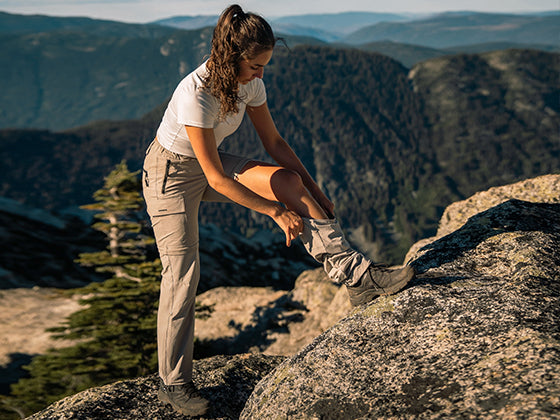
With zip-off legs, I can adjust the pants according to the temperature. This is particularly useful when a hike starts in the morning at low temperatures and the day becomes significantly warmer later on.
I have often appreciated this flexibility on my own hikes. During a multi-day hike on the Rennsteig covering around 170 kilometers, the mornings were sometimes still cool, while temperatures reached almost 30°C in the afternoon.
Under those conditions, I do not want to hike in a heavy, warm pair of pants. Convertible Hiking Pants give me the option to adapt to the temperature without having to carry a second complete pair of pants.
Fleece-Lined Hiking Pants vs. Convertible Pants – The Key Difference

For me, the basic difference is relatively easy to explain:
Fleece-lined Pants are primarily designed to retain warmth.
Convertible Pants are primarily designed to provide flexibility.
| Feature | Fleece-Lined Hiking Pants | Convertible Hiking Pants |
|---|---|---|
| Main purpose | Warmth and insulation | Temperature flexibility |
| Cold temperatures | Excellent | Moderate |
| Changing temperatures | Limited | Excellent |
| Snowy conditions | Better suited | Depends on layering |
| High-intensity hiking | Can feel too warm | More adaptable |
| Long periods outdoors | Very comfortable | Depends on conditions |
| Zip-off legs | No | Yes |
| Best for | Winter and consistently cold conditions | Spring, fall, and changing weather |
That does not mean, however, that zip-off hiking pants are generally not an option for cold weather hiking. It depends on how cold it is and what additional clothing layers I am wearing.
On a cool autumn morning, lightweight hiking pants combined with an additional layer can be perfectly sufficient. If temperatures drop well below freezing and I am spending a longer period of time outdoors, I would be more likely to choose insulated pants.
What I Wear in Changing Temperatures

Alpine tours are a good example of this. During a challenging tour above Garmisch at the Alpspitze, the morning can be cool and windy. During the ascent, however, the physical effort quickly makes me feel warmer. A few hours later, temperatures in the city can already be close to 30°C.
Situations like this show me exactly why there is no single perfect pair of outdoor pants for every hike.
Zip-Off Hiking Pants can be very practical when temperatures change. I can zip off the legs and do not have to constantly change my entire pair of pants.
In genuinely cold conditions, however, I would rather choose fleece-lined pants. In that situation, maximum adaptability is not my priority – retaining warmth is.
Moosehill: Convertible Pants or Fleece-Lined Snow Pants?
The different concepts can also be illustrated well by the Moosehill models.
The Convertible Hiking Pants HikerFlex M015 for men is designed as Convertible Hiking Pants. According to the manufacturer, they combine lightweight, breathable, and quick-drying material with water-resistant properties. The zip-off legs make them particularly interesting for changing temperatures.
The Women's Convertible Hiking Pants HikerFlex W024 follows a similar concept for women. Here, too, the focus is on the ability to adapt the pants to different temperatures and outdoor activities.
The fleece-lined models are different. The Moosehill Fleece-Lined Hiking Pants SnowVenture M041 is designed for winter conditions and features warm fleece lining. The Womens Fleece-Lined Hiking Pants SnowVenture W021 is also designed for cold and snowy outdoor conditions.
For me, these two categories are therefore not necessarily direct competitors. They solve different problems.
If I need maximum flexibility, I would be more likely to choose Convertible Hiking Pants. If warmth and protection against cold conditions are the priority, fleece-lined pants are the more logical choice.
Should I Buy Convertible Hiking Pants?

If I frequently hike in changing temperatures, I would answer this question with a clear “Yes, it can make sense.”
Especially on multi-day trips, the low weight is an advantage. I can respond to different temperatures with a single pair of pants instead of carrying several pairs.
However, it is important to remain realistic. Convertible Pants are not automatically the best hiking pants for cold weather. In severe frost, snow, and cold winds, insulated pants can be considerably more comfortable.
For me, the decision therefore depends on how cold it will be and how much movement I expect during the hike.
What to Wear Hiking in Cold Weather Pants?
When hiking in cold weather, I would base my choice of pants on several factors:
Cool temperatures and lots of movement:
Lightweight, flexible hiking pants can be sufficient, especially if I can adapt to the conditions with additional clothing layers.
Strongly changing temperatures:
This is where Convertible Pants are particularly practical. The zip-off legs functionality allows for quick adjustment.
Constant cold and wind:
Here, I would rather choose warm, insulated pants. Fleece-lined pants provide additional thermal insulation and can be more comfortable during longer periods in cold conditions.
Snow and winter conditions:
Here, I prefer pants specifically designed for these conditions, with a warm construction and appropriate protection against wind and weather.
Windproof softshell fabric can also play an important role in cold conditions. Even when the temperature itself is not extremely low, strong winds can make the cold feel considerably more uncomfortable.
My Personal Deciding Factor: Movement
In my opinion, one factor is often underestimated when choosing hiking pants: the intensity of movement.
During a long, steep ascent, I can quickly become warm even when temperatures are low. Heavily insulated pants can then become uncomfortable because the heat cannot escape quickly enough.
On the other hand, when I am walking along a windy summit ridge or standing at a viewpoint for an extended period, I am glad to have additional insulation.
That is why, before a hike, I do not only ask myself: “How cold will it be?”
I also ask: How much will I be moving, and how long will I be outside?
For me, this combination of temperature and activity is more important than the temperature alone.
| Hiking Condition | Recommended Pants |
|---|---|
| Below-freezing temperatures | Fleece-lined / insulated pants |
| Cold + strong wind | Fleece-lined or wind-resistant pants |
| Cold morning → warm afternoon | Convertible hiking pants |
| High-intensity uphill hiking | Lightweight / convertible pants |
| Snowshoeing | Fleece-lined winter pants |
| Multi-day hiking | Convertible hiking pants + layers |
| Autumn hiking | Convertible hiking pants |
| Long periods standing outdoors | Insulated pants |
Conclusion: Warmth or Flexibility?
Fleece-lined Hiking Pants and Convertible Hiking Pants both have their place, but they serve different purposes.
For me, fleece-lined pants are the better choice when warmth, insulation, and protection in consistently cold conditions are the priority. Convertible Pants, on the other hand, are a particularly flexible solution for hikes with changing temperatures and varying levels of physical activity.
That is why there is no universal winner for me here either.
If I am planning a winter hike with consistently low temperatures and snow, I would prefer a warm, fleece-lined pair of pants. If I am planning a long hike with significant changes in temperature, I would be more likely to choose Convertible Pants.
The question “Should I buy convertible hiking pants?” therefore cannot be answered universally for me. It depends on how and where I hike.
The best hiking pants for cold weather are not necessarily the warmest ones. For me, they are the ones that match the actual conditions, the planned activity, and my personal tolerance for cold.
About the Author
Patrick J. is a German outdoor apparel writer and hiking enthusiast with first-hand experience testing hiking clothing in changing weather conditions. He focuses on practical outdoor clothing, hiking gear, and comfort across different weather conditions.
FAQ
Are fleece-lined hiking pants good for winter?
Yes. Fleece-lined hiking pants can be a good choice for winter hiking when temperatures remain consistently low, especially in cold, windy, or snowy conditions. They provide additional insulation and warmth compared with lightweight hiking pants.
Are convertible hiking pants good for cold weather?
Convertible hiking pants can work well in cool or changing weather, especially when combined with appropriate layers. However, they may not provide enough insulation by themselves in freezing temperatures, strong winds, or prolonged snow exposure.
What is the difference between fleece-lined and convertible hiking pants?
Fleece-lined hiking pants are designed primarily for warmth and insulation, while convertible hiking pants are designed primarily for flexibility. Fleece-lined pants are better suited to consistently cold conditions, while convertible pants are useful when temperatures change throughout the day.
What pants should you wear hiking in cold weather?
The best hiking pants for cold weather depend on temperature, wind, activity level, and how long you will stay outdoors. Fleece-lined or insulated pants are useful in consistently cold conditions, while lightweight or convertible hiking pants can work well when temperatures fluctuate or activity levels are high.
Are convertible hiking pants good for winter hiking?
They can be, depending on the conditions. Convertible hiking pants can work for active winter hiking when combined with suitable base and outer layers, but fleece-lined or insulated pants are generally more suitable for freezing temperatures, snow, and prolonged exposure to cold.
Are fleece-lined pants too warm for hiking?
They can be during high-intensity hiking. On steep ascents or strenuous activities, the additional insulation may cause you to feel too warm. In those situations, lightweight or convertible hiking pants can provide better temperature flexibility.
Are convertible hiking pants good for changing temperatures?
Yes. This is one of their main advantages. Zip-off legs allow you to convert the pants into shorts when temperatures rise, making them particularly useful for hikes that start cold and become warmer later in the day.
What are the best hiking pants for cold weather?
There is no single best type for every situation. Fleece-lined hiking pants are better suited to consistently cold and snowy conditions, while convertible hiking pants are more suitable for changing temperatures and higher activity levels. The best choice depends on the weather and the type of hike.
--- END ---
For more details about hiking Clothing , please click to choose the best-fitting products!

【Ski & Snow Advice】
· What pants are good for snow
· Snow Pants Buying Guide for Beginners
· What Pants to Wear in the Snow
【Hiking Advice】
· Why 4-in-1 Hiking Pants Are the Future of Outdoor Clothing
· Sustainable Hiking Gear: Why Buying Better Matters
· Hiking Pants vs. Leggings: Why Trekking Trousers Win for Spring
· The Golden Rules for Hiking in 2026
【Biking Advice】
· What shorts do Mountain Bikers wear?
· Why Are Mountain Bike Shorts Padded Instead of the Seat?
· Comfortable and Stylish: 5 Expert Tips for Bike Shorts
【Golfing Advice】
· Do You Wear Pants or Shorts to Golf?
· Quick Guide: Choosing the Perfect Golf Pants
· 4 Tips to Efficiently Choose Your Golf Clothing and Accessories